

BEYOND LEARNING - HOW LEARNING TRULY HAPPENS AT UTS

Beyond Learning is not an additional programme alongside the core curriculum. It is the very way learning is designed and experienced at UTS every day.
At UTS, learning is built to be active, relevant, and connected to the world around students, so that knowledge goes beyond memorisation and becomes real capability.

WELLBEING

Students feel safe, understood, and supported, ready to learn with a positive mindset.

HOLISTIC DEVELOPMENT

Students grow holistically through their individual strengths, from academics to life skills and personal confidence.

LEARNING EXPERIENCE

Learning comes alive through projects, the arts, sports, clubs, community engagement, and real-world experiences.

FUTURE PREPARATION

Students are equipped with global competencies, digital skills, early career awareness, and a lifelong love of learning to step confidently into the future.

Wellbeing

At UTS, students grow in an environment where both physical and emotional wellbeing are genuinely valued. In every moment of school life, the UTS community is there to support them, helping students feel safe, confident, and ready to learn and grow.

1.

Supporting physical wellbeing

Every UTS student is encouraged to develop a healthy body as the foundation for intellectual growth and overall wellbeing

  • Physical Education: The Physical Education programme at UTS helps students build strong bodies, improve endurance, and enhance their overall fitness through a variety of age-appropriate and engaging activities. Through PE lessons, sports clubs, and regular sporting events within the UTS House System, students gradually develop healthy habits, motor skills, teamwork, and a positive attitude towards physical activity.

  • School nutrition: The canteen provides three meals each day: breakfast, lunch, and an afternoon snack. To ensure that every meal is both enjoyable and nutritionally balanced, students are served age-appropriate portions based on carefully planned menus. A wide variety of dishes inspired by Vietnamese, Asian, and European cuisine helps meet students’ nutritional needs while also catering to diverse tastes.

  • School bus service: UTS provides a safe and reliable school bus service with more than 40 pick-up and drop-off points across Ho Chi Minh City. Every journey is closely supervised by the School Services Coordination Team, drivers, and bus guardians, ensuring students’ safety and giving parents peace of mind throughout their child’s daily commute.

2.

Supporting emotional wellbeing

Emotional wellbeing is nurtured across all grade levels through the Wellbeing programme, which is designed to support students’ overall development. In addition, UTS provides monthly psychology-focused workshops and professional support from school counsellors at each campus.

Wellbeing and Counselling Office: The Wellbeing and Counselling Office at UTS is a supportive space where students can find balance in their lives and receive appropriate guidance to help them grow. School counsellors act as trusted listeners and guides, supporting students by:

  • Promoting awareness and understanding of mental health care.
  • Supporting character development and the growth of learning skills and personal competencies.
  • Providing professional guidance to help students navigate emotional and psychological challenges in both school and everyday life.

In addition, UTS school counsellors work closely with parents to provide timely support and early intervention when challenges arise, helping to create a safe, nurturing, and positive environment for every student.

3.

The joy of learning 

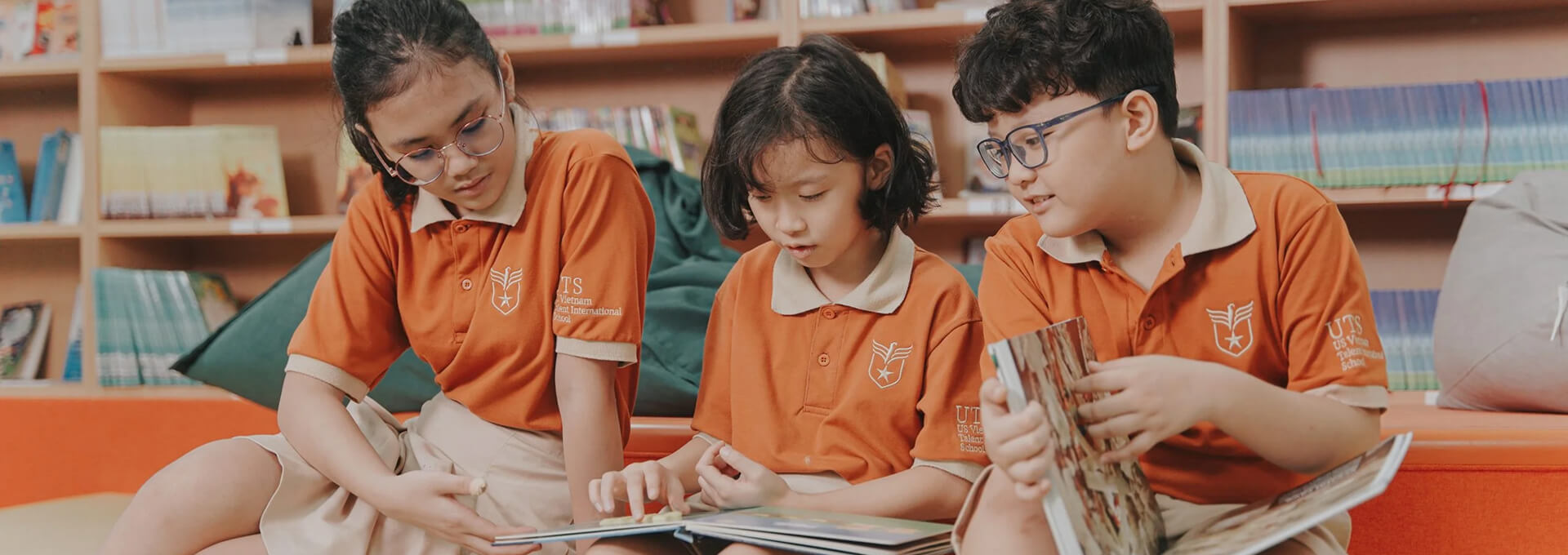
Through positive educational approaches, students experience learning as something natural and joyful. Each lesson is designed to spark curiosity, encourage active participation, and help children enjoy learning in ways that match their own pace of development.

Holistic development

UTS believes that every child has talents waiting to be discovered by dedicated educators. Learning is not about becoming the same, but about gradually understanding what suits each student best and growing along a pathway that is right for them. Throughout this journey of self-discovery, students receive the support they need to develop in a balanced way across Academics, Skills, and Emotional Wellbeing, creating the foundation for holistic and sustainable growth.

1.

Growing in a language-rich environment

Students are immersed in English through a wide range of learning experiences, from classroom lessons to the arts, music, creative projects, and community activities. English is not limited to lesson time, but becomes the language students use to express their emotions, ideas, and individuality in everyday school life.

  • Everyday English communication environment: English is present in every part of learning and school life at UTS. From classrooms, hallways, and playgrounds to community-building activities, students are encouraged to use English to communicate, express emotions, share ideas, and build relationships. Living with the language every day helps students develop natural English fluency and confidence in international communication.
  • Special subjects – Learning English through experience: Alongside academic subjects, UTS integrates English into a range of specialist, experience-rich subjects, allowing students to use the language in meaningful, engaging, and emotionally connected contexts.

– Music (for Grades 6–9): Music is taught entirely in English, creating a space where students engage with language through emotion and expression. Through singing, playing instruments, ensemble work, and performance, students develop their artistic talents while also building confidence and fluency in English in a natural and enjoyable way.

– Performing Arts (for Grades 3–9): Drama, stage performance, and creative expression provide students with authentic opportunities to use spoken English in meaningful ways. Through role-play, emotional expression, and collaborative performance, students strengthen their communication skills, confidence in front of an audience, and their ability to express themselves in an international learning environment.

Learning projects – Using English in real contexts: Through interdisciplinary projects, creative activities, and school events, students use English as a tool for research, presentations, discussion, and collaboration. Project-based learning helps students develop language thinking, teamwork, and academic communication skills, while also building confidence in using English in real-life learning and social situations.

2.

Discovering personal interests

Diverse club system: UTS is moving towards a Student-led Club model, where students take the lead in planning, organising, and developing activities, while teachers and experts support them as mentors. This model helps students learn responsibility, teamwork, time management, and leadership in an authentic school setting. Clubs are organised into key areas including Thinking, Arts, Physical Development, and Skills & Community, creating opportunities for students across different age groups and grade levels to connect through shared interests and passions. Through the club system, students develop a wide range of competencies, from creativity and critical thinking to communication and social collaboration.

UTS House System and 6 core values: The UTS House System is designed as a close-knit community where every student is nurtured to develop responsibility, teamwork, and a strong sense of belonging. Rooted in UTS’s six core values – Integrity, Respect, Courage, Contribution, Creativity, and Lifelong Learning. House activities give students meaningful opportunities to experience and practise these values in natural and engaging ways. Through inter-house events and activities across sports, the arts, public speaking, and academics, students are able to connect with peers of different ages and grade levels. This environment helps them broaden relationships, strengthen social skills, learn collaboration, and gain important experiences for their future growth.

Learning experience

At UTS, learning goes far beyond textbooks. Lessons come to life through projects, group work, and real-world experiences designed to match each stage of development, helping students understand concepts more deeply and connect knowledge with the world around them.

1.

Learning through experience 

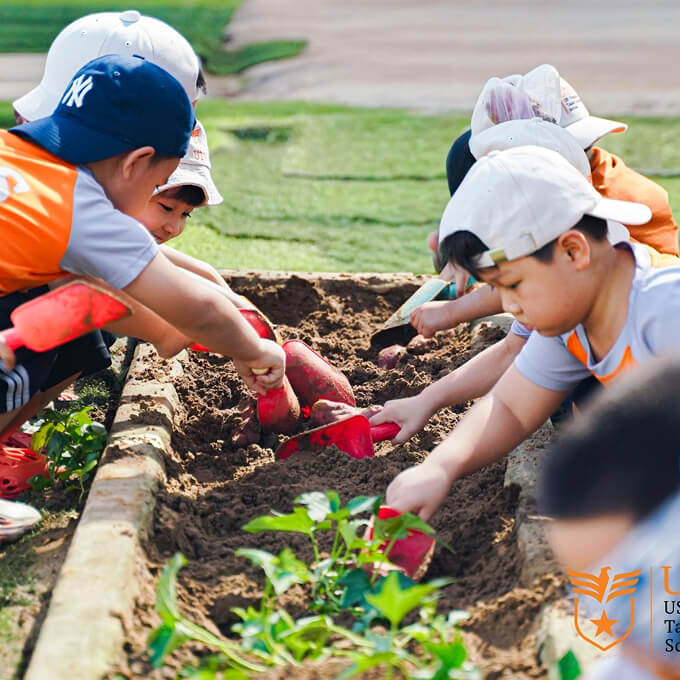
Students learn through interdisciplinary projects, cross-grade collaboration, school events, and more than 50 clubs at UTS – spaces where they can participate, explore, contribute, and grow alongside peers. Learning therefore becomes more than listening in class; it becomes a process of doing, discussing, and discovering together.

Active learning through real-world exploration:

Students learn through interdisciplinary projects, cross-grade collaboration, and school-wide events.

Experiential Learning: Growing through change, creating impact in the community!

The Experiential Learning programme at UTS is designed to nurture students into changemakers by equipping them with the skills and values of global citizens. After 12 years of learning, UTS-ers are prepared to create positive impact in their communities through meaningful and practical actions. In doing so, they not only contribute to the wider world but also grow significantly as individuals, building the essential skills needed to step confidently into the future.

  • Students take part in a wide range of age-appropriate learning experiences, including: Science and nature exploration, Life skills and community engagement, Career orientation through visits to universities and corporations, Community connection and service.

  • These experiences are thoughtfully designed to integrate concepts of Global Citizenship and Sustainable Development into students’ learning journeys.

  • After each experiential learning activity, students complete assessments, presentations, or reflective reports to share their perspectives and feedback, helping evaluate the quality and impact of the programme while deepening their own learning.

2.

Purpose-built learning spaces

At UTS, student learning experiences are placed at the centre of every design decision. That is why all classrooms and specialist learning spaces are purpose-built specifically for teaching and learning from the very beginning. Each space is thoughtfully designed to suit different age groups, ensuring safety while also being equipped with modern facilities and learning tools that make every lesson more engaging, visual, and inspiring.

3.

Multicultural learning environment

At UTS, students learn alongside teachers from diverse national and cultural backgrounds, bringing a wide range of perspectives and rich educational experiences into the classroom. In addition, exchange programmes and collaborative activities with student groups from around the world provide opportunities for students to listen, share, and develop respect for different cultures and perspectives.

Future preparation

At UTS, students are introduced to future planning from an early age in ways that are thoughtful, age-appropriate, and relevant to each stage of learning. This helps them better understand themselves and the possibilities ahead.

1.

Personalised guidance from an early stage

From experiential learning activities in Primary School to more structured career and academic guidance in Secondary School, students gradually explore their interests, recognise their strengths, and begin shaping a learning direction that suits them in an ever-changing world.

2.

Equipping students with future-ready skills

Students are nurtured with the essential capabilities needed for the future, including self-directed learning, global thinking, adaptability, and a lifelong learning mindset. These skills help them feel confident learning and working in diverse, multicultural environments.

3.

Meaningful real-world experiences

Students have opportunities to take part in real-world experiences such as company visits, university tours, and connection activities, helping them gain clearer insight into future study options and the next stages of their educational journey.

Wellbeing

Supporting physical wellbeing

Every UTS student is encouraged to develop a healthy body as the foundation for intellectual growth and overall wellbeing

  • Physical Education: The Physical Education programme at UTS helps students build strong bodies, improve endurance, and enhance their overall fitness through a variety of age-appropriate and engaging activities. Through PE lessons, sports clubs, and regular sporting events within the UTS House System, students gradually develop healthy habits, motor skills, teamwork, and a positive attitude towards physical activity.

  • School nutrition: The canteen provides three meals each day: breakfast, lunch, and an afternoon snack. To ensure that every meal is both enjoyable and nutritionally balanced, students are served age-appropriate portions based on carefully planned menus. A wide variety of dishes inspired by Vietnamese, Asian, and European cuisine helps meet students’ nutritional needs while also catering to diverse tastes.

  • School bus service: UTS provides a safe and reliable school bus service with more than 40 pick-up and drop-off points across Ho Chi Minh City. Every journey is closely supervised by the School Services Coordination Team, drivers, and bus guardians, ensuring students’ safety and giving parents peace of mind throughout their child’s daily commute.

Supporting emotional wellbeing

Emotional wellbeing is nurtured across all grade levels through the Wellbeing programme, which is designed to support students’ overall development. In addition, UTS provides monthly psychology-focused workshops and professional support from school counsellors at each campus.

Wellbeing and Counselling Office: The Wellbeing and Counselling Office at UTS is a supportive space where students can find balance in their lives and receive appropriate guidance to help them grow. School counsellors act as trusted listeners and guides, supporting students by:

  • Promoting awareness and understanding of mental health care.
  • Supporting character development and the growth of learning skills and personal competencies.
  • Providing professional guidance to help students navigate emotional and psychological challenges in both school and everyday life.

In addition, UTS school counsellors work closely with parents to provide timely support and early intervention when challenges arise, helping to create a safe, nurturing, and positive environment for every student.

The joy of learning 

Through positive educational approaches, students experience learning as something natural and joyful. Each lesson is designed to spark curiosity, encourage active participation, and help children enjoy learning in ways that match their own pace of development.

Holistic development

Growing in a language-rich environment

Students are immersed in English through a wide range of learning experiences, from classroom lessons to the arts, music, creative projects, and community activities. English is not limited to lesson time, but becomes the language students use to express their emotions, ideas, and individuality in everyday school life.

  • Everyday English communication environment: English is present in every part of learning and school life at UTS. From classrooms, hallways, and playgrounds to community-building activities, students are encouraged to use English to communicate, express emotions, share ideas, and build relationships. Living with the language every day helps students develop natural English fluency and confidence in international communication.
  • Special subjects – Learning English through experience: Alongside academic subjects, UTS integrates English into a range of specialist, experience-rich subjects, allowing students to use the language in meaningful, engaging, and emotionally connected contexts.

– Music (for Grades 6–9): Music is taught entirely in English, creating a space where students engage with language through emotion and expression. Through singing, playing instruments, ensemble work, and performance, students develop their artistic talents while also building confidence and fluency in English in a natural and enjoyable way.

– Performing Arts (for Grades 3–9): Drama, stage performance, and creative expression provide students with authentic opportunities to use spoken English in meaningful ways. Through role-play, emotional expression, and collaborative performance, students strengthen their communication skills, confidence in front of an audience, and their ability to express themselves in an international learning environment.

Learning projects – Using English in real contexts: Through interdisciplinary projects, creative activities, and school events, students use English as a tool for research, presentations, discussion, and collaboration. Project-based learning helps students develop language thinking, teamwork, and academic communication skills, while also building confidence in using English in real-life learning and social situations.

Discovering personal interests

Diverse club system: UTS is moving towards a Student-led Club model, where students take the lead in planning, organising, and developing activities, while teachers and experts support them as mentors. This model helps students learn responsibility, teamwork, time management, and leadership in an authentic school setting. Clubs are organised into key areas including Thinking, Arts, Physical Development, and Skills & Community, creating opportunities for students across different age groups and grade levels to connect through shared interests and passions. Through the club system, students develop a wide range of competencies, from creativity and critical thinking to communication and social collaboration.

UTS House System and 6 core values: The UTS House System is designed as a close-knit community where every student is nurtured to develop responsibility, teamwork, and a strong sense of belonging. Rooted in UTS’s six core values – Integrity, Respect, Courage, Contribution, Creativity, and Lifelong Learning. House activities give students meaningful opportunities to experience and practise these values in natural and engaging ways. Through inter-house events and activities across sports, the arts, public speaking, and academics, students are able to connect with peers of different ages and grade levels. This environment helps them broaden relationships, strengthen social skills, learn collaboration, and gain important experiences for their future growth.

Learning experience

Learning through experience 

Students learn through interdisciplinary projects, cross-grade collaboration, school events, and more than 50 clubs at UTS – spaces where they can participate, explore, contribute, and grow alongside peers. Learning therefore becomes more than listening in class; it becomes a process of doing, discussing, and discovering together.

Active learning through real-world exploration:

Students learn through interdisciplinary projects, cross-grade collaboration, and school-wide events.

Experiential Learning: Growing through change, creating impact in the community!

The Experiential Learning programme at UTS is designed to nurture students into changemakers by equipping them with the skills and values of global citizens. After 12 years of learning, UTS-ers are prepared to create positive impact in their communities through meaningful and practical actions. In doing so, they not only contribute to the wider world but also grow significantly as individuals, building the essential skills needed to step confidently into the future.

  • Students take part in a wide range of age-appropriate learning experiences, including: Science and nature exploration, Life skills and community engagement, Career orientation through visits to universities and corporations, Community connection and service.

  • These experiences are thoughtfully designed to integrate concepts of Global Citizenship and Sustainable Development into students’ learning journeys.

  • After each experiential learning activity, students complete assessments, presentations, or reflective reports to share their perspectives and feedback, helping evaluate the quality and impact of the programme while deepening their own learning.

Purpose-built learning spaces

At UTS, student learning experiences are placed at the centre of every design decision. That is why all classrooms and specialist learning spaces are purpose-built specifically for teaching and learning from the very beginning. Each space is thoughtfully designed to suit different age groups, ensuring safety while also being equipped with modern facilities and learning tools that make every lesson more engaging, visual, and inspiring.

Multicultural learning environment

At UTS, students learn alongside teachers from diverse national and cultural backgrounds, bringing a wide range of perspectives and rich educational experiences into the classroom. In addition, exchange programmes and collaborative activities with student groups from around the world provide opportunities for students to listen, share, and develop respect for different cultures and perspectives.

Future preparation

Personalised guidance from an early stage

From experiential learning activities in Primary School to more structured career and academic guidance in Secondary School, students gradually explore their interests, recognise their strengths, and begin shaping a learning direction that suits them in an ever-changing world.

Equipping students with future-ready skills

Students are nurtured with the essential capabilities needed for the future, including self-directed learning, global thinking, adaptability, and a lifelong learning mindset. These skills help them feel confident learning and working in diverse, multicultural environments.

Meaningful real-world experiences

Students have opportunities to take part in real-world experiences such as company visits, university tours, and connection activities, helping them gain clearer insight into future study options and the next stages of their educational journey.